UTILITY
UTILITY EQUIPMENT CONTROLLERS &
OPERATOR CONTROL SOLUTIONS
INDUSTRY: Utility
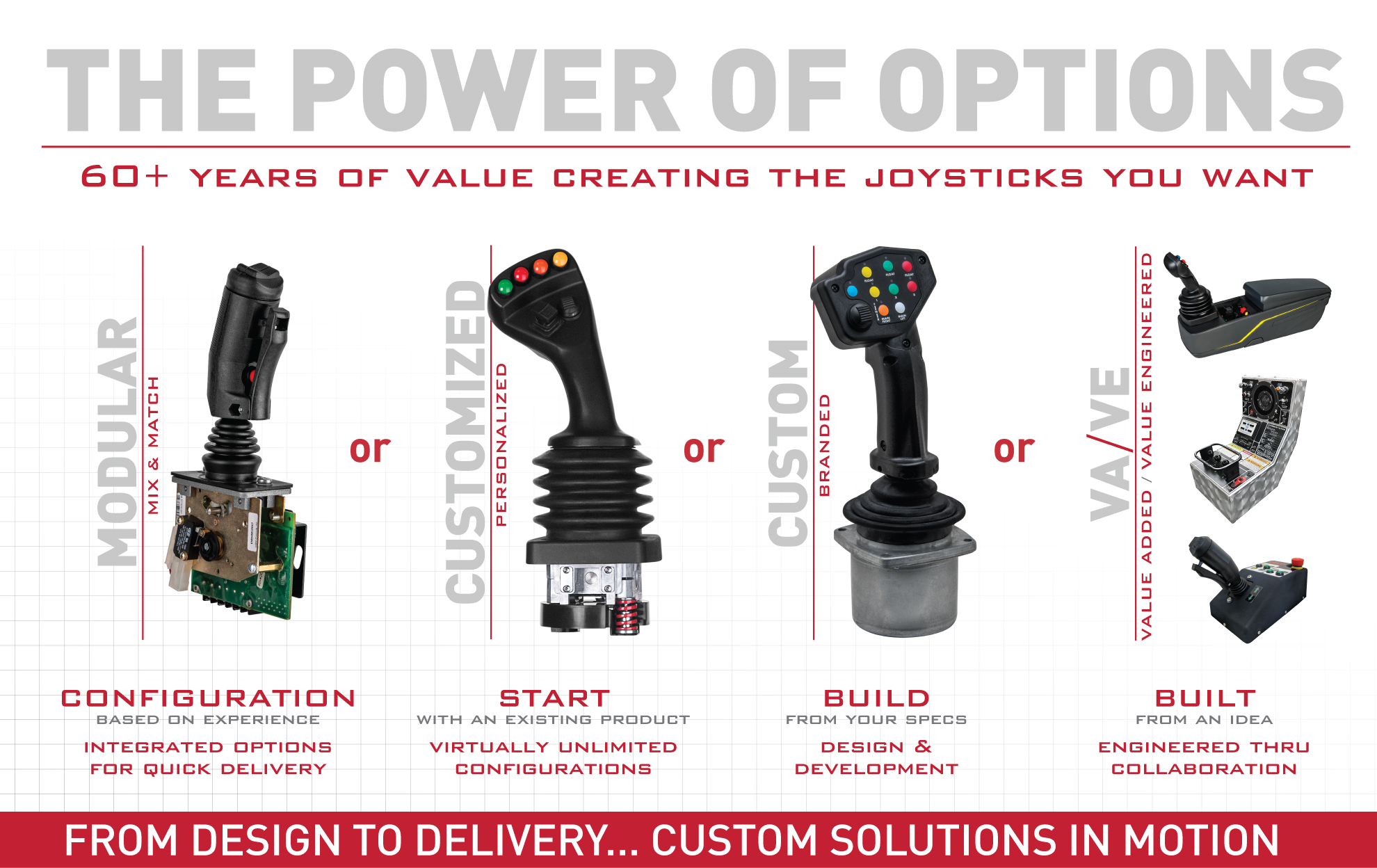
OEM Controls designs and manufactures configurable industrial controllers for utility vehicles and specialized mobile equipment where precise, repeatable operator input is required.
From single-axis functions to coordinated machine movements, the right control solution depends on the equipment, functions being controlled, operator interface, electrical architecture and operating environment.
Utility Equipment Applications
Utility equipment can combine lifting, positioning, cable handling, digging, hydraulic and auxiliary functions within a single machine. Control requirements vary by equipment type and by how the operator interacts with those functions.


Boom & Lift Control
Aerial devices and other lift equipment can require proportional control of boom elevation, extension, rotation and positioning functions.
Single- or multi-axis controls can be selected based on the number of movements, required control response and operator interface.
Cable Handling & Line Work Equipment
Cable tractors and other cable-handling equipment require controlled machine movement and positioning during utility field operations.
Controller selection should account for the functions being controlled, operator position, required response and electrical interface.
Digging & Attachment Control
Trenchers, digging equipment and other specialized utility machines may combine hydraulic movement with mounted tools and auxiliary functions.
The operator interface can be configured around the primary movements while placing frequently used auxiliary functions where they are accessible to the operator.
Specialized Utility Vehicles
Utility fleets include specialized mobile equipment with control requirements that vary considerably by machine and application.
Rather than selecting a joystick by equipment category alone, engineers should consider the required movements, control axes, operator inputs, mounting constraints, electrical interface and operating environment.
Engineering the Right Utility Equipment Control
Utility equipment rarely has a one-size-fits-all operator interface. Selecting or configuring the controller starts with understanding what the machine must do and how the operator needs to control it.
Control Functions
Determine the motions and commands the operator must control: single-axis or multi-axis movement, proportional functions, switching functions, hydraulic control, traction or other machine commands.
Also consider whether functions are operated independently or simultaneously and which auxiliary functions need to remain within easy reach.
Operator Interface
Handle style, switch placement, controller travel, detents, spring return, mounting position, actuation requirements and available console space can all affect how the control should be configured.
For equipment with multiple functions, consider which commands belong on the primary controller and which are better handled through grip-mounted switches, separate controls or foot-operated inputs.
Electrical & System Integration
The controller must match the machine’s electrical and control architecture.
Depending on the product and configuration, OEM Controls offers analog, Hall-effect, CAN-based and other electronic interface options. CANopen and J1939 are available on supported controller configurations.
Output requirements should be verified against the specific controller rather than assumed across the entire product line.
Operating Environment
Utility equipment may operate outdoors and encounter moisture, dust, contaminants, vibration, temperature variation and repeated operating cycles.
Environmental protection should be specified for the actual controller, configuration and installation. Ingress-protection ratings, temperature ranges and other environmental specifications vary by product and should be verified during controller selection.
OEM Controls can work with equipment manufacturers and system integrators to configure controls around these application requirements.
Frequently Asked Questions (FAQs)

Explore Utility Control Solutions
Single- and multi-axis controls for proportional and coordinated machine functions.
Configurable grips and controls for operator-accessible auxiliary functions.
Alternative input devices for switching, selector and specialized control requirements.