

PUBLIC WORKS
CONTROLS FOR PUBLIC WORKS
AND MUNICIPAL EQUIPMENT
INDUSTRY: Public Works
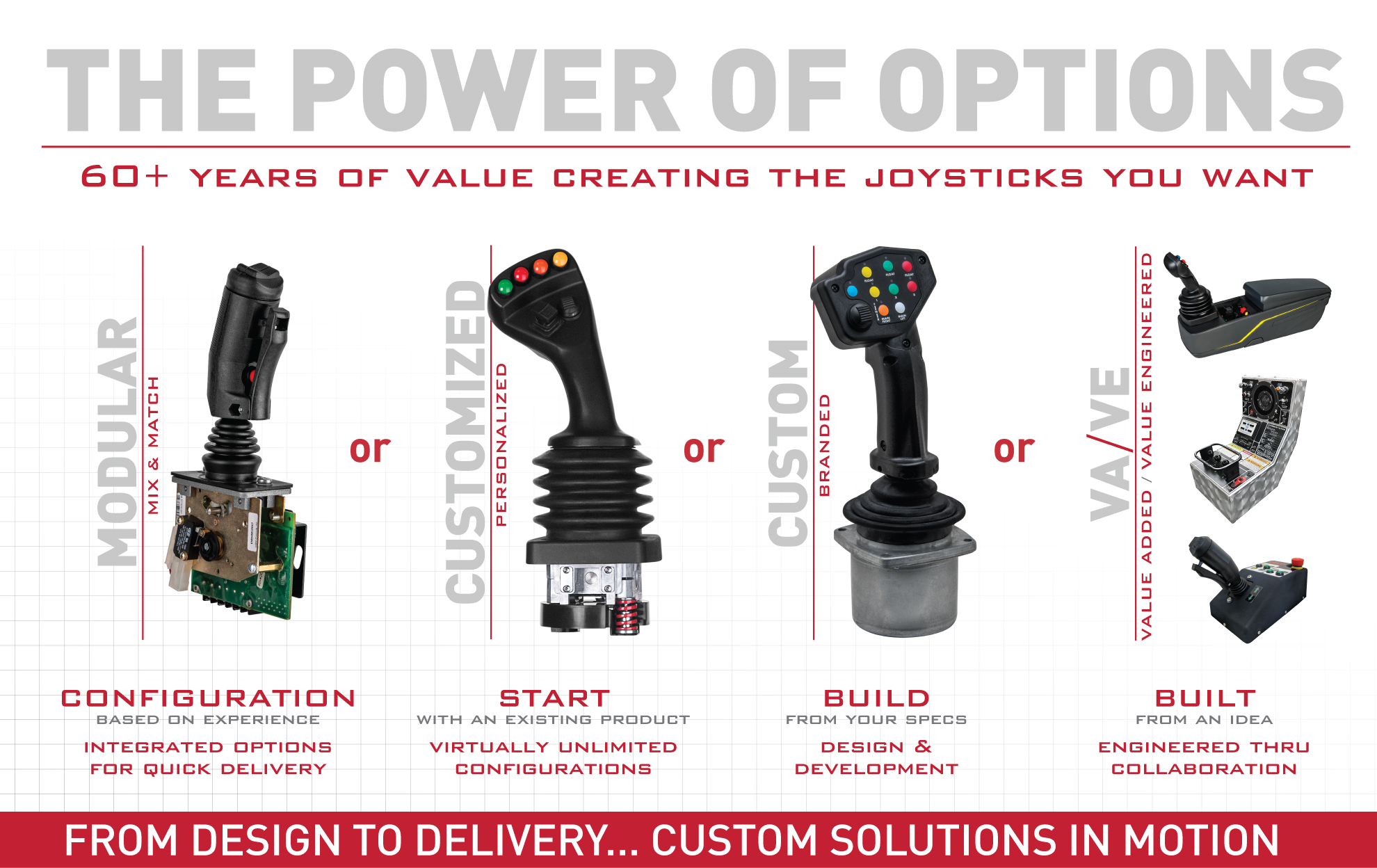
OEM Controls designs and manufactures configurable joystick controllers, handles, switches, foot pedals and electronic control solutions for demanding mobile and off-highway equipment.
Operators may need to position attachments, manage hydraulic motion, coordinate multiple machine functions or activate auxiliary controls—all from an interface that needs to remain intuitive throughout the workday.
Public Works Applications


Snow & Ice Equipment
Snowplows, spreaders and related winter-maintenance equipment can require operators to control positioning, material distribution and auxiliary functions while continuing to operate the vehicle.
Street & Road Maintenance
Street sweepers, road-maintenance vehicles and other specialized municipal equipment can combine vehicle operation with hydraulically or electronically controlled implements.
Material Handling & Infrastructure Work
Loaders, excavators, backhoes and other equipment used for municipal maintenance may require proportional control of individual or coordinated machine functions.
Waste & Recycling
Waste removal and recycling equipment performs repetitive work in demanding operating environments.
OEM Controls supports waste-removal and recycling applications with configurable single-axis, multi-axis and Hall-effect control options designed around the requirements of the vehicle.
Engineering the Right Public Works Control Solution
Function & Motion
Identify which functions require proportional movement, directional control, simultaneous multi-axis input or a discrete switched command. This helps determine whether the application calls for a single-axis controller, multi-axis joystick, switch, pedal or combination of controls.
Operator Interface
Frequently used functions should be positioned where they can be accessed naturally and consistently.
Handle shape, travel, gate pattern, detents and auxiliary switch placement can all influence how an operator interacts with the equipment.
The goal is to configure the controls around the work being performed.
Operating Environment
Public works equipment may operate through changing temperatures, moisture, dust, debris, vibration and repeated daily use.
Environmental requirements, sensing technology, mechanical life and mounting should be considered alongside control functionality when evaluating a controller.
Machine Integration
The controller also needs to communicate correctly with the machine.
Depending on the equipment architecture, that may involve proportional analog signals, digital outputs or CAN-based communication.
Defining the required interface early helps narrow the controller configurations appropriate for the application.
Frequently Asked Questions (FAQs)

Explore Public Works Control Solutions
Single- and multi-axis controls for proportional and coordinated machine functions.
Configurable grips and controls for operator-accessible auxiliary functions.
Alternative input devices for switching, selector and specialized control requirements.
Build The Control Around The Work
Public works equipment can perform very different jobs, but the control-selection process begins in the same place: the machine, the operator and the functions that need to be controlled.
OEM Controls can help evaluate those requirements and identify a control configuration appropriate for the application.