

PAVING
CONFIGURABLE OPERATOR CONTROLS FOR
DEMANDING PAVING APPLICATIONS
INDUSTRY: Paving
OEM Controls provides configurable controller solutions for gravity-feed pavers, specialty asphalt pavers, conveyor-type pavers, brooms, and other paving machinery.
Paving equipment brings machine movement, material handling, positioning, and other operating functions together in a demanding operator environment.
Paving Equipment Applications
Paving equipment may require operators to manage propulsion, steering, material flow, screed functions, positioning, and auxiliary commands from a relatively compact control environment.


Asphalt & Specialty Pavers
Pavers combine machine travel with material-handling and paving functions.
Depending on the machine, operator controls may support propulsion, steering, hopper functions, conveyor and auger operation, screed adjustments, and other frequently used commands.
Conveyor-Type & Material-Handling Equipment
Material-handling paving equipment requires coordinated control of machine movement and material flow.
Multifunction controls can support propulsion and directional input alongside conveyor and other material-handling functions.
Road Milling Equipment
Milling machines present a different operator-control challenge from asphalt placement.
Machine travel, steering, cutting functions, height adjustment, leveling, and conveyor operation may all need to be managed through the operator interface.
Brooms & Surface Preparation Equipment
Brooms and surface-preparation machines combine machine movement with application-specific working functions.
Controller selection should begin with the motions and functions required by the equipment rather than applying a control configuration designed for another machine type.
Engineering Controls for Pavement Equipment
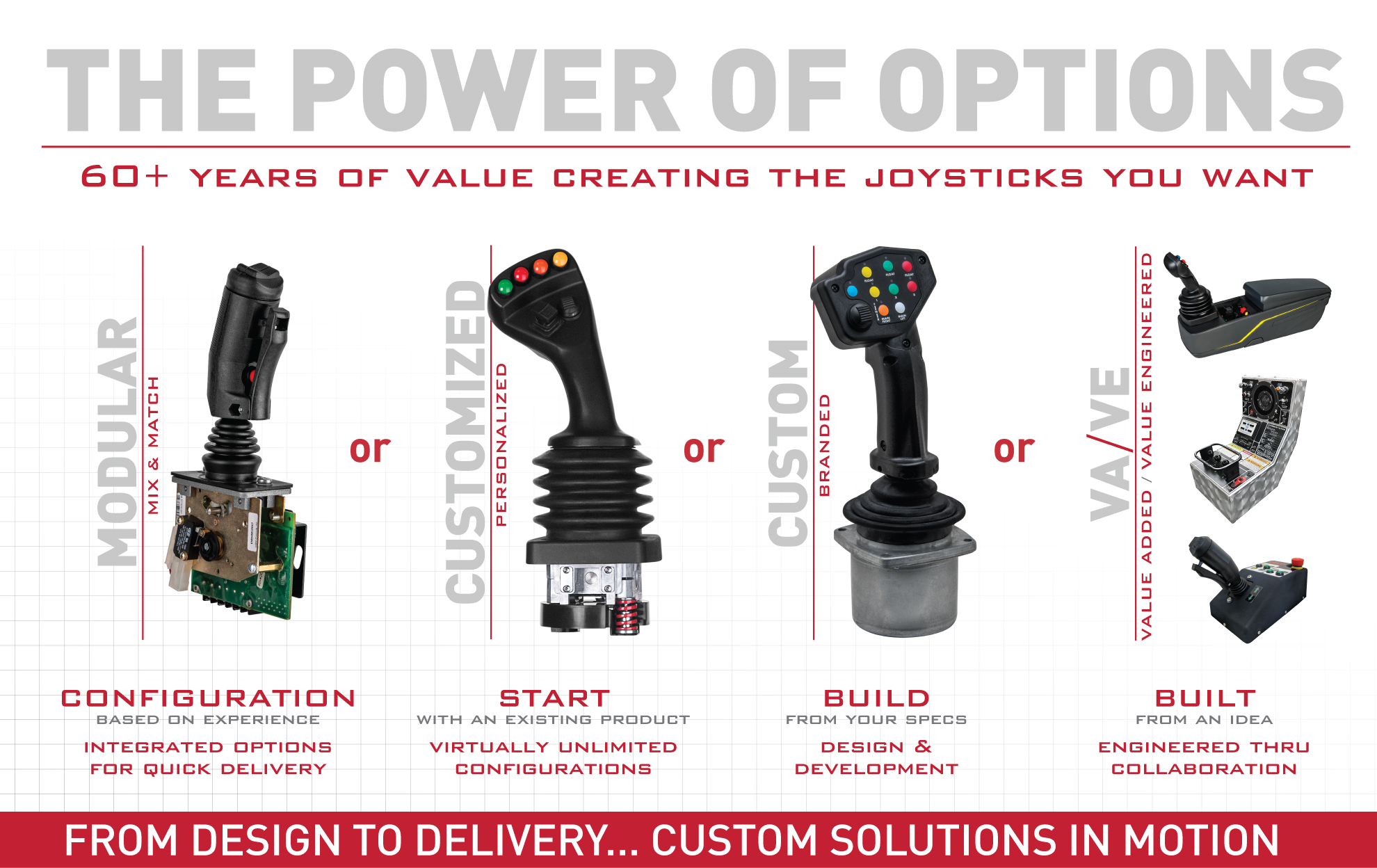
Paving control designs can be customized around the feel and functions required for the application.
Machine Function & Control Architecture
Start with what the operator needs to control.
Paving equipment can combine propulsion, steering, material-feed systems, hopper functions, screed adjustments, positioning, and auxiliary commands. Milling equipment introduces additional functions such as machine height, leveling, milling, and conveyor control.
The number of functions, axes of movement, and required input type all influence the control approach.
Operator Interface & Control Layout
Frequently used functions should be positioned where they are easy and natural to access.
Grip geometry, controller movement, switch placement, function grouping, and actuation all influence how effectively the operator interacts with the machine.
Multifunction controls can consolidate related commands when that approach supports the operator’s workflow.
Operating Environment
Paving controls operate in demanding outdoor environments and may be exposed to vibration, dust, temperature changes, weather, and everyday jobsite wear.
Environmental requirements should be considered alongside function and interface requirements when selecting and configuring the control.
System Integration
The control also has to fit the machine mechanically and electrically.
Engineers should consider output requirements, connectors, wiring, mounting, available space, and the relationship between the operator input and the machine’s control architecture.
Evaluating those requirements early helps narrow the appropriate controller and configuration.
Frequently Asked Questions (FAQs)

Explore Paving Equipment Control Solutions
Single- and multi-axis controls for proportional and coordinated machine functions.
Configurable grips and controls for operator-accessible auxiliary functions.
Alternative input devices for switching, selector and specialized control requirements.
Configure the Interface Around the Machine
OEM Controls states that paving control designs can be customized around the feel and functions required for the application.
OEM also offers customized operator-chair systems for paving equipment.
Need Help Defining the Right Marine Control Solution?
OEM Controls can help review the functions, operator interface, electrical requirements, mounting and environmental conditions of your vessel or port equipment application.