INDUSTRY: Marine
OEM Controls designs and manufactures configurable industrial controllers and data-delivery solutions for marine vessels, onboard equipment, port machinery and terminal operations.
Marine and port equipment place very different demands on the operator interface. Common OEM Controls applications include propulsion and positioning, deck machinery, specialized work vessels, and port and terminal equipment.
Marine & Port Applications
OEM Controls supports configurable operator controls and data solutions across marine vessels, onboard equipment, port machinery and terminal operations. Requirements vary by equipment type, control functions, operator interface, system integration and operating environment.


Propulsion, Steering & Positioning
Configurable controls can support propulsion, steering, thruster, directional and positioning functions where predictable response and intuitive operator control are important.
Winches, Cranes & Deck Machinery
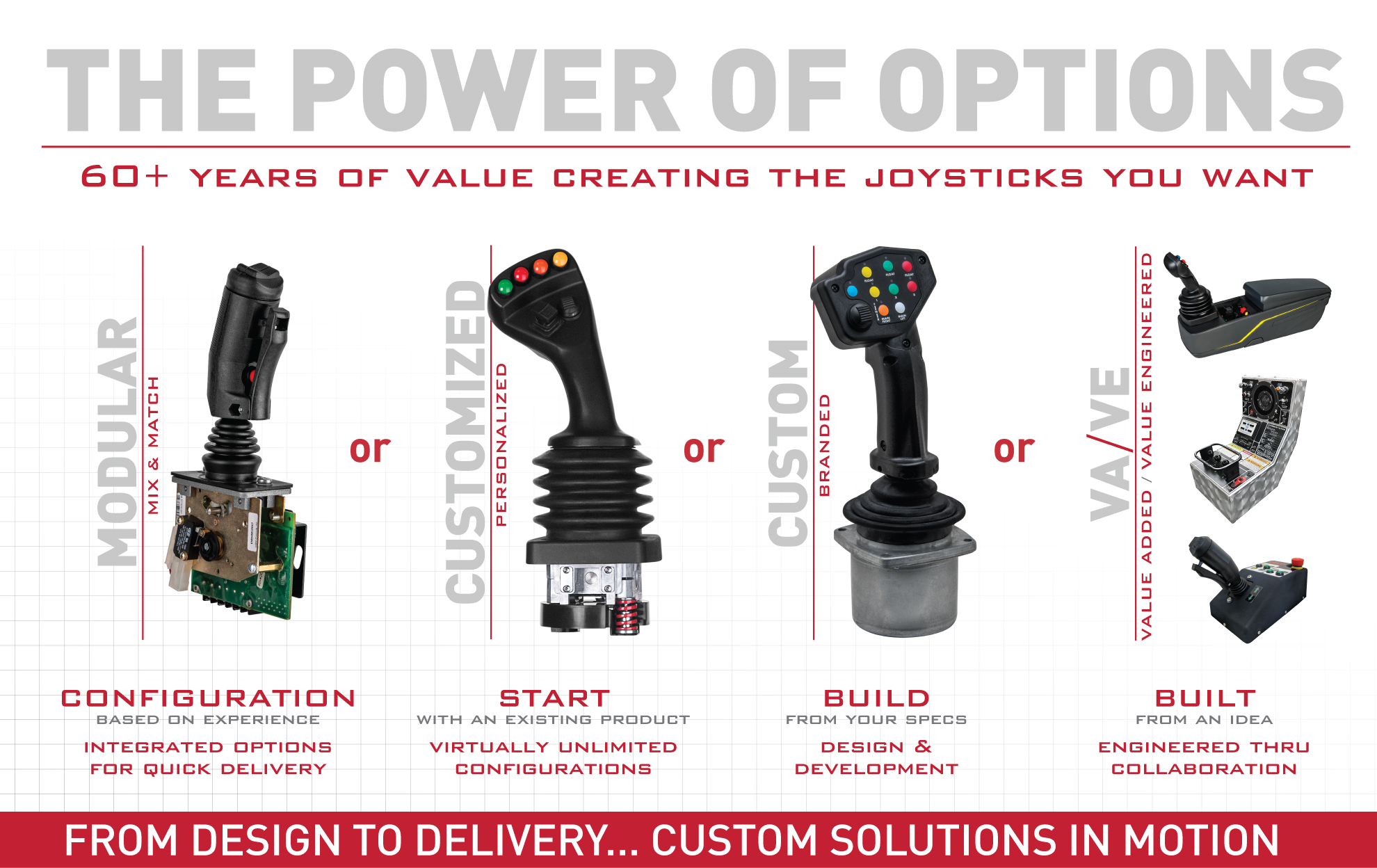
Single-axis and multi-axis controls can support hoist, winch, lifting, positioning and auxiliary machinery functions, with the operator interface configured around the commands required at the control.
Dredging & Specialized Marine Equipment
Dredging, excavation and specialized work vessels may require coordinated proportional functions, configurable operator interfaces and integration with hydraulic or electronic machine systems.
Port & Terminal Equipment
Port and terminal machinery can require precise movement, repetitive operation and configurable controls for cranes, cargo handling, yard equipment and other specialized applications.
Asset & Equipment Visibility
Some marine and port applications also require visibility beyond the operator control itself. OEM Controls Data Delivery products can support appropriate port, yard and terminal applications where equipment location, movement, utilization or asset identification needs to be monitored.
Find the Right Solution for Your Marine or Port Application
Start with the vessel, machine, port equipment or monitoring application.
Answer a few questions about the functions being controlled, operator requirements, electrical integration and operating environment to narrow the OEM Controls products that may fit your application.
Engineering the Right Marine Control Solution
Marine and port equipment rarely requires a one-size-fits-all operator interface. Selecting or configuring the controller starts with understanding how the machine must operate.
Control Functions
Determine the motions and commands the operator must control: single-axis or multi-axis movement, proportional functions, switching functions, positioning, hydraulic control or other machine commands.
Operator Interface
Handle style, switch placement, detents, spring return, travel, mounting position and available console space can all affect how the controller should be configured.
Electrical & System Integration
The controller must also match the machine’s electrical architecture. Depending on the product and configuration, OEM Controls offers analog, Hall-effect, CANbus and other electronic interface options.
Operating Environment
Marine and port equipment may be exposed to moisture, salt, contaminants, vibration, temperature variation and repeated operating cycles. Environmental protection should therefore be specified for the actual controller, installation and application rather than assumed from the industry alone.
OEM Controls works with equipment manufacturers and system integrators to configure controls around these application requirements.
Real-World Port Application
Tracking Assets with Ports America
OEM Controls partnered with Ports America to use Bluetooth® tags to track shipping crates within a port environment.
Tags attached to individual crates allowed their movement and location within the port operation to be monitored as they entered, left or were stored within designated areas.
The application demonstrates how OEM Controls Data Delivery technology can extend the Marine solution beyond machine controls to port and terminal asset visibility.
Frequently Asked Questions (FAQs)

Explore Marine Control Solutions
Single- and multi-axis controls for proportional and coordinated machine functions.
Configurable grips and controls for operator-accessible auxiliary functions.
Alternative input devices for switching, selector and specialized control requirements.