

INDUSTRY: Logging & Forestry
Logging and forestry equipment requires reliable, intuitive control of machine travel, booms, grapples, harvesting heads, winches, cutting functions, conveyors, and other hydraulic or electronic systems.
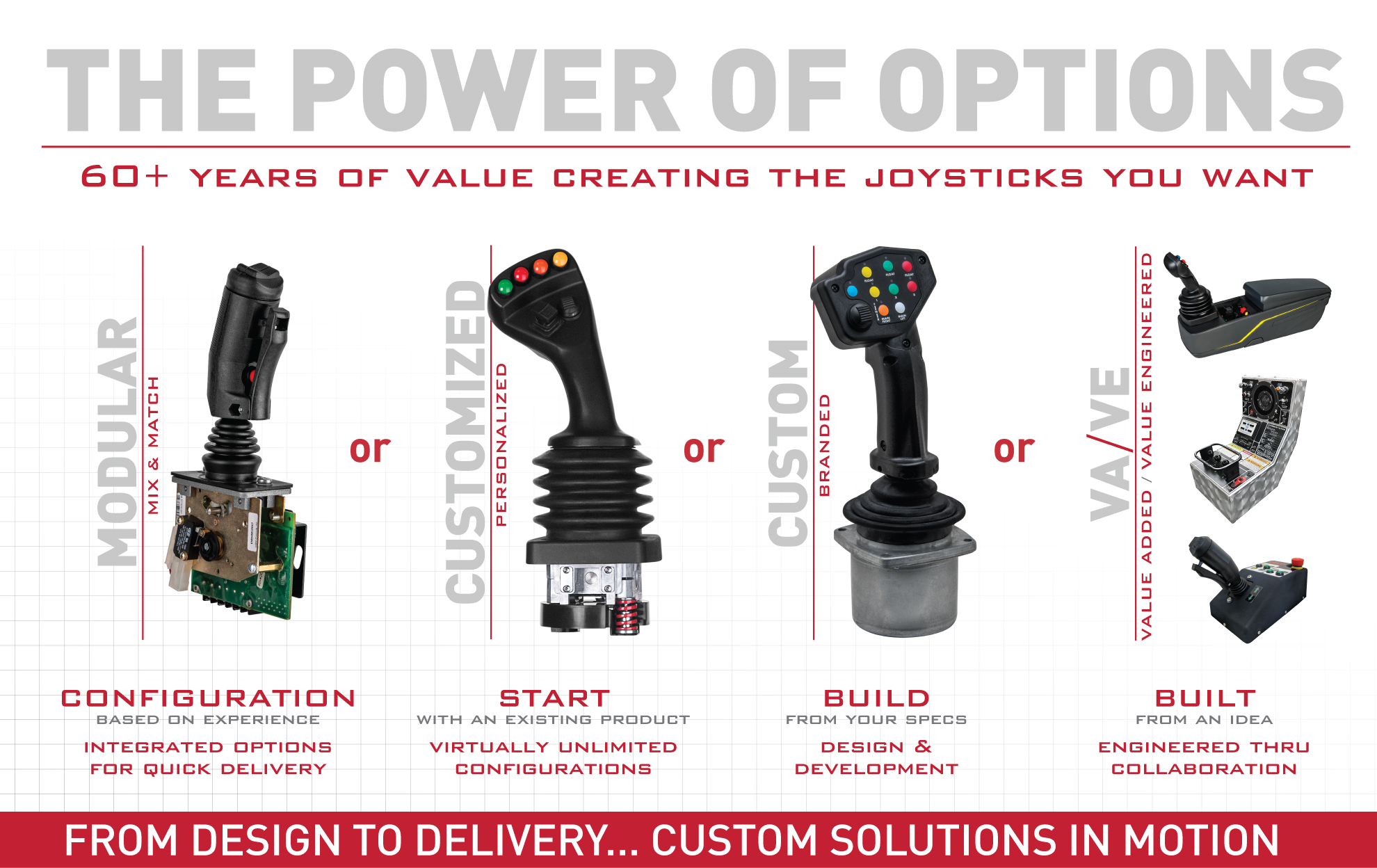
OEM Controls designs and manufactures configurable single-axis and multi-axis joystick controllers, handles, switches, foot pedals, electronic modules, and related operator controls for forestry equipment manufacturers, system integrators, and specialized machinery applications.
The right control solution depends on the machine, the functions being controlled, the number of required axes and handle inputs, the electrical architecture, the operating environment, and the needs of the operator.
Logging & Forestry Equipment Applications
Forestry machines place very different demands on the operator interface. The control approach should be based on the work the machine performs, the functions the operator must coordinate, and how those functions are used throughout the operating cycle.


Harvesting & Processing
Feller bunchers, harvesters, processors and delimbers
These machines may require coordinated proportional control of boom, positioning, cutting, harvesting-head, feed and auxiliary functions, with frequently used inputs placed within easy operator reach.
Extraction & Loading
Skidders, forwarders, log loaders and forestry excavators
Grapple, boom, steering, winch, extension and positioning functions often benefit from smooth modulation and an operator-interface layout designed for repeated work cycles.
Chipping & Grinding
Skidders, forwarders, log loaders and forestry excavators
These applications may use single-axis controls, switches, levers or foot pedals for feed, conveyor and auxiliary hydraulic functions based on the required sequence and level of modulation.
Winch & Timber Handling
Cable logging, winch systems and specialized timber-handling equipment
Direction, speed, positioning, braking and auxiliary functions may require a combination of proportional and discrete controls matched to the machine architecture and integration requirements.
Engineering the Right Forestry Control Solution
Selecting a forestry controller involves more than choosing the number of axes. The control must fit the functions being performed, the operator interface, the machine architecture and the conditions in which the equipment will operate.
Control Functions
Define the machine movements and auxiliary functions the operator must control. Consider the number of axes, proportional-control requirements, functions that may need to operate simultaneously, and whether specific motions require smooth modulation or dedicated single-function input.
Operator Interface
Determine how the operator needs to interact with the machine. This may include handle-mounted buttons, triggers, rockers or switches, as well as return-to-center, detent or friction mechanisms, foot controls, mounting orientation, reach and grip considerations.
Electrical & Machine Integration
Confirm how the control will interface with the machine. Output requirements, signal behavior, connectors, wiring, mounting constraints and compatibility with the existing electrical or hydraulic control architecture should be reviewed before final configuration.
Operating Environment
Forestry equipment may be exposed to dust, debris, moisture, vibration, shock, temperature changes and extended operating cycles. Environmental suitability and installation requirements should be confirmed for the specific controller and machine application.
Frequently Asked Questions (FAQs)

Explore Logging & Forestry Control Solutions
Single-axis, dual-axis and multi-axis controls for proportional, coordinated and dedicated machine functions.
Configurable handles that can incorporate buttons, triggers, rockers, switches and other operator-accessible functions.
Additional operator inputs for auxiliary functions, dedicated controls and machine sequences where hand-operated controls are not the preferred interface.
Electronic control components for application-specific signal management and machine-integration requirements.