

EMERGENCY
SERVICES
CONFIGURABLE CONTROLS FOR
EMERGENCY RESPONSE EQUIPMENT
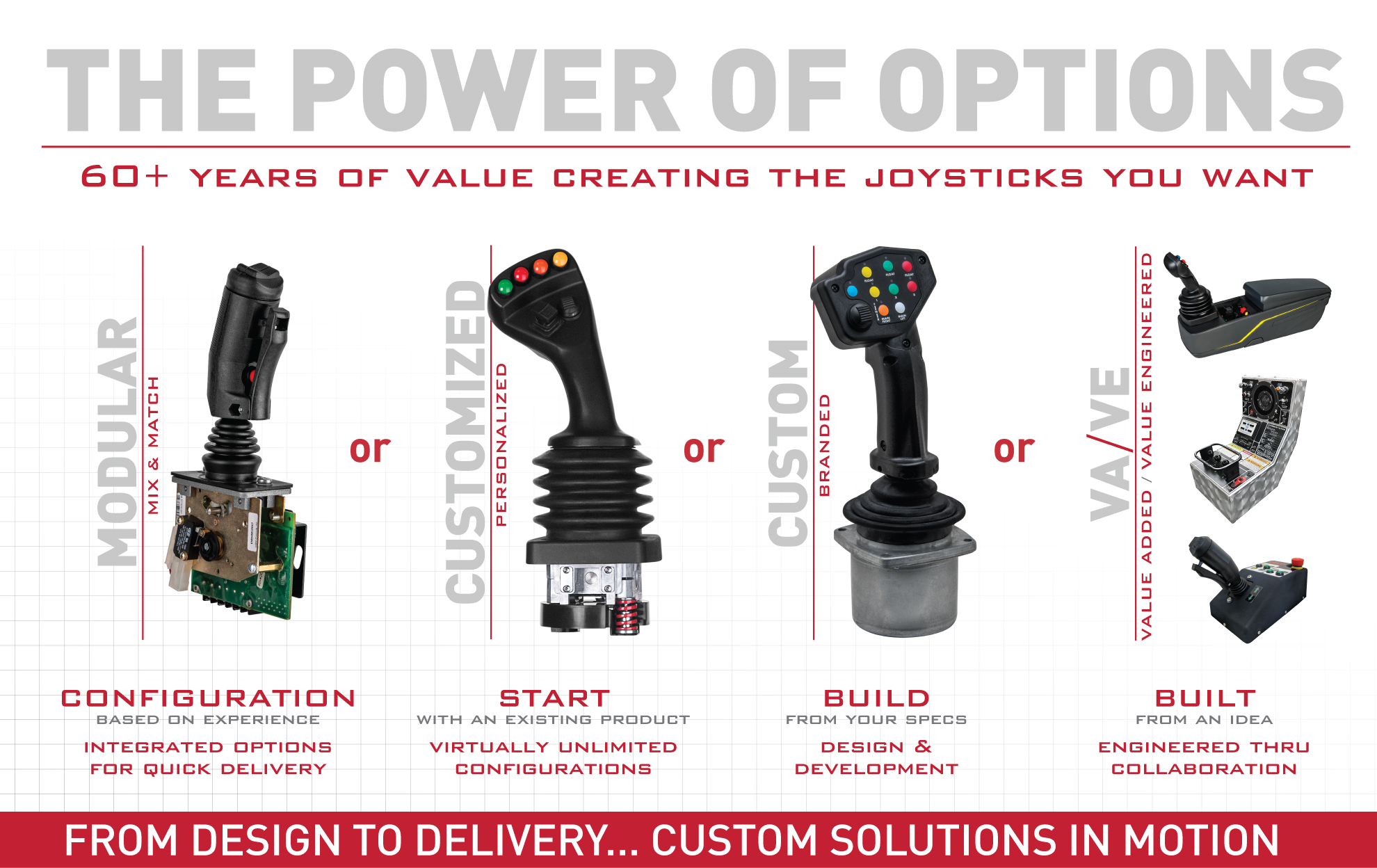
OEM Controls designs configurable industrial controllers for specialized mobile equipment, with single-, dual- and multi-axis solutions that can be matched to the functions, operator requirements and electrical architecture of the application.
Emergency response equipment places demanding control functions within compact, operator-focused environments. Aerial devices, stabilizing systems, rescue equipment and auxiliary functions can each require a different combination of movement, control response and operator inputs.
Emergency Services Applications
Emergency apparatus can combine multiple hydraulic and electrical functions across different operating positions. The control interface needs to reflect how the equipment moves, which functions the operator needs and how those commands integrate with the larger machine system.
OEM Controls offers configurable joystick controllers and handles for proportional and switched control functions, allowing engineers to build the operator interface around the equipment application.


Aerial Ladders & Platforms
Aerial ladders and platforms can require operators to manage elevation, extension, rotation and other positioning functions from a compact control station.
Multi-axis joystick configurations can bring related movements together within a single operator interface, while proportional outputs can support applications where variable command is required.
Stabilizers & Outriggers
Stabilizing systems support apparatus setup before aerial or other equipment is placed into operation.
Controls for these systems should be configured around the number of stabilizer functions, operator position, visibility and the equipment’s control architecture.
Booms & Rescue Equipment
Telescoping and articulating equipment can combine several positioning functions with additional controls required at the operator’s hand.
The controller configuration should reflect the actual movements of the equipment and make frequently used functions accessible without unnecessarily complicating the interface.
Pump & Auxiliary Systems
Emergency apparatus can incorporate pumps and other hydraulic or electrical equipment alongside its primary aerial or rescue functions.
These applications may require dedicated proportional or switched controls, or additional functions incorporated into an existing operator interface.
Engineering the Right Control Interface
The controller is one part of the larger machine system. Selecting the right configuration starts with understanding how the equipment operates and what the operator needs to control.
Function & Motion
Define the movements and equipment functions first.
How many axes are required? Which functions need proportional control? Which are switched? Does the operator need to control several movements from one joystick or are dedicated controls more appropriate?
These requirements help determine the controller architecture.
Operator Interface
Handle style, control effort, switch placement, detents and other grip functions affect how the operator interacts with the equipment.
The objective is not to put as many functions as possible into one controller. It is to place the right functions where they make sense for the operating task.
Operating Environment
Consider where the controller will be installed and the conditions it will encounter.
Temperature, moisture, contaminants, vibration, exposure and repeated use can all influence controller selection. Environmental requirements should be compared with the specifications of the controller being considered.
System Integration
The controller also has to work with the equipment’s electrical and control architecture.
Output requirements, communication interface, wiring, connectors, mounting and available panel space should be defined early so the controller can be configured around the machine rather than adapted late in the design.
Frequently Asked Questions (FAQs)
Explore Emergency Services Control Solutions
Single- and multi-axis controls for proportional and coordinated machine functions.
Configurable grips and controls for operator-accessible auxiliary functions.
Alternative input devices for switching, selector and specialized control requirements.
Controls Configured Around Your Equipment
Emergency response equipment doesn’t follow a single control architecture.
The right solution starts with the machine: what needs to move, how the operator needs to control it, where the controller will be installed and how it needs to communicate with the equipment.
OEM Controls can help evaluate those requirements and identify a controller configuration for the application.