

AGRICULTURAL EQUIPMENT
INDUSTRIAL CONTROLS
AND DATA SOLUTIONS
INDUSTRY: Agriculture
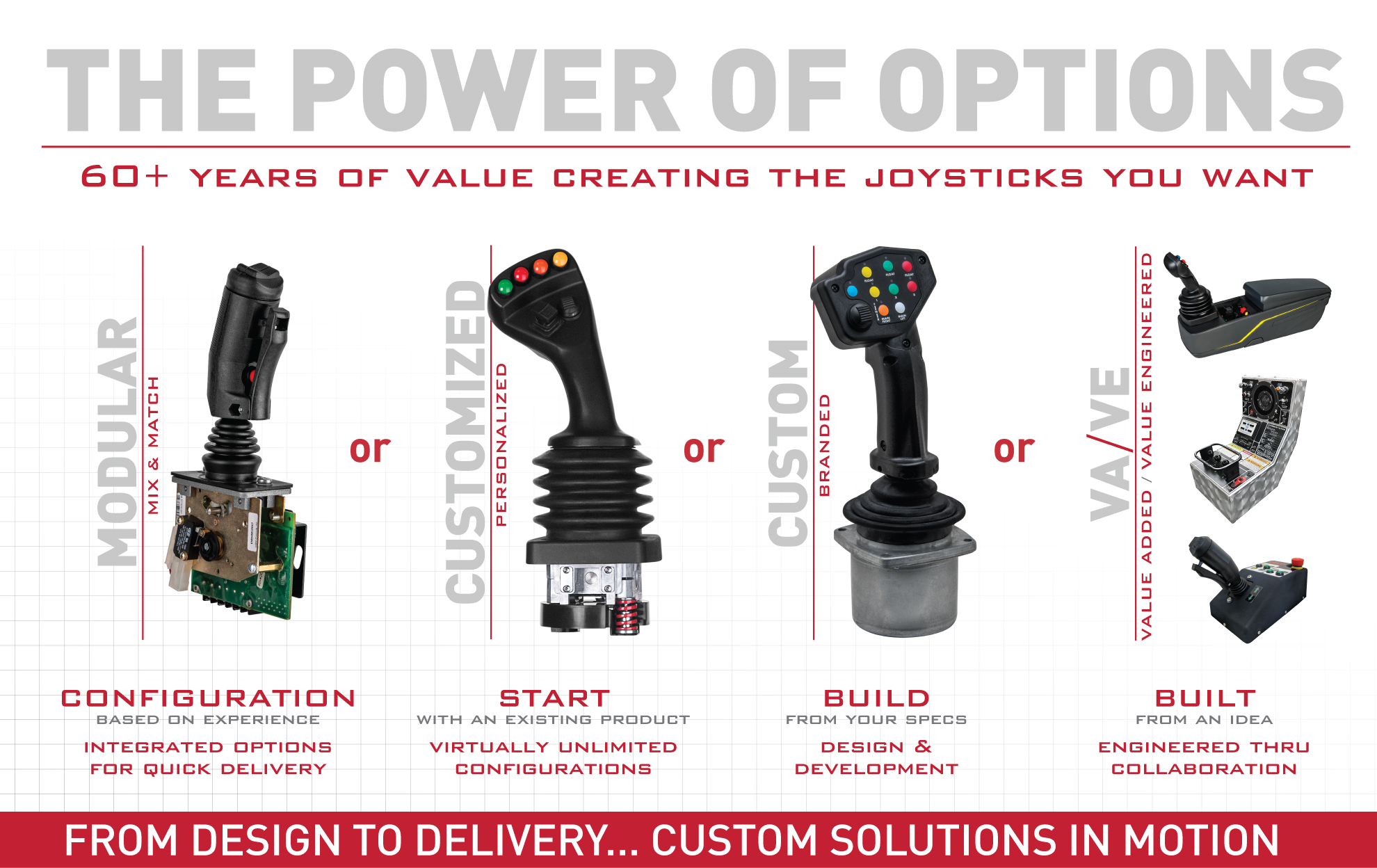
OEM Controls provides configurable joystick controllers and operator controls for agricultural machinery, with options that can be selected around the machine’s functions, operator interface, electrical requirements, and operating environment.
Agricultural equipment requires operator controls that support precise machine movement, implement functions, auxiliary controls, and demanding day-to-day operation.
Agricultural Equipment Applications
Agricultural machinery can combine machine movement, hydraulic or electronic implement functions, attachments, and auxiliary controls within a single operator environment.
The right control configuration depends on what the equipment needs to do and how the operator needs to interact with it.


Tractors & Specialty Equipment
Tractors and specialty agricultural machines may require operators to manage attachments, implements, hydraulic functions, and other machine operations from the cab.
Joystick and multi-function controls can consolidate frequently used functions into an operator interface configured around the requirements of the equipment.
Harvesting & Hay Equipment
Combines, harvesters, balers, and other crop and hay equipment can place multiple machine and implement functions within the operator’s control.
The controller should provide the movement, proportional control, and auxiliary inputs required by the application while keeping frequently used functions accessible to the operator.
Sprayers, Applicators & Planting Equipment
Sprayers, applicators, planters, and seeders may combine machine movement with specialized implement functions that require repeatable operator input.
Control selection should account for the number and type of functions being managed, how frequently they are used, and how those controls integrate with the machine.
Specialized Agricultural Machinery
Not every agricultural machine fits a standard control layout.
Specialty equipment may require a specific combination of axes, proportional functions, switches, handle controls, mounting, and electrical interfaces. A configurable control platform allows these requirements to be considered as part of the overall machine design.
Engineering the Right Agriculture Control Solution
Selecting a controller for agricultural machinery involves more than determining how many directions a joystick needs to move.
The complete operator interface should be evaluated around four areas: the functions being controlled, how the operator interacts with those functions, how the controller integrates with the machine, and the conditions in which the equipment operates.
Control Functions
Start with what the machine needs the operator to control.
Depending on the application, requirements may include:
- Single-axis or multi-axis movement
- Proportional control
- Directional functions
- Implement and attachment functions
- Auxiliary machine functions
- Switch-operated commands
- Multiple functions incorporated into the joystick handle
Defining these functions early helps determine the appropriate controller type and handle configuration.
Operator Interface
Agricultural machinery may be operated for extended periods with frequent interaction with the same controls.
Consider:
- Grip and handle configuration
- Control movement
- Switch and button placement
- Number of functions within reach
- Frequency of operation
- Mounting position
- Operator ergonomics
The objective is to create an interface that gives the operator access to the necessary machine functions without adding unnecessary control complexity.
Electrical & System Integration
The controller must also fit the machine’s electrical and control architecture.
Application requirements can include:
- Controller output
- Signal requirements
- Connectors and wiring
- Switch outputs
- Mounting constraints
- Interface with the machine’s control system
These requirements should be considered alongside the mechanical and operator-interface requirements rather than after a controller has already been selected.
Operating Environment
Agricultural controls can be exposed to demanding operating conditions.
The application review should consider factors such as:
- Dust and dirt
- Moisture
- Vibration
- Temperature variation
- Frequency and duration of use
- Controller location and installation conditions
Understanding the operating environment helps identify the controller and configuration appropriate for the machine.
Frequently Asked Questions (FAQs)

Explore Agriculture Control Solutions
Single- and multi-axis controls for proportional and coordinated machine functions.
Configurable grips and controls for operator-accessible auxiliary functions.
Alternative input devices for switching, selector and specialized control requirements.
Start With The Machine. Build The Control Around The Application.
The right agricultural equipment control starts with understanding what the machine needs to do, how the operator needs to interact with it, and how the controller needs to integrate with the system.
Share your equipment, control functions, operator requirements, environmental conditions, and interface requirements with OEM Controls. Our engineers can help you identify an appropriate control solution for the application.